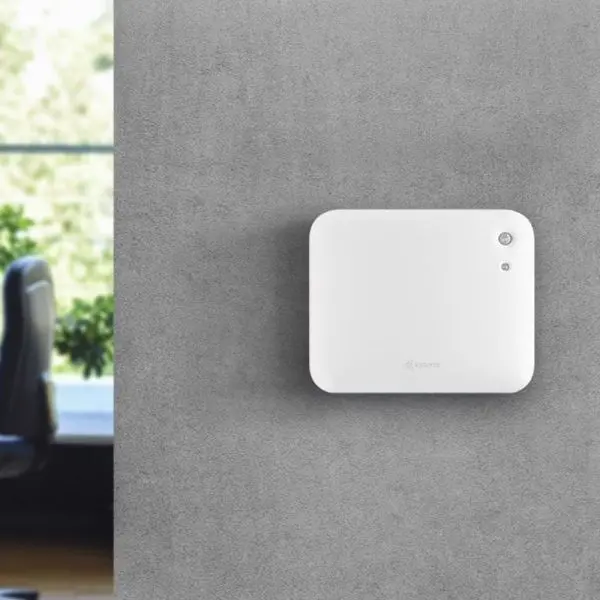
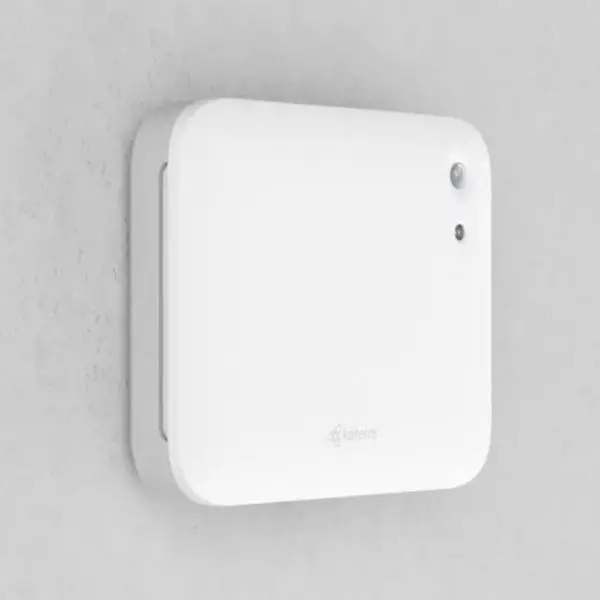



Kaiterra SE-300 Sensedge Go Commercial LoRaWAN Wireless IAQ Sensor Monitor
Kaiterra Sensedge Go
Wireless IAQ Sensor
Smart Air Quality Monitoring Solutions
Commercial Grade LoRaWAN Sensors
(Model No.: SE-300A/300W/300L)
Products of Switzerland
Descriptions
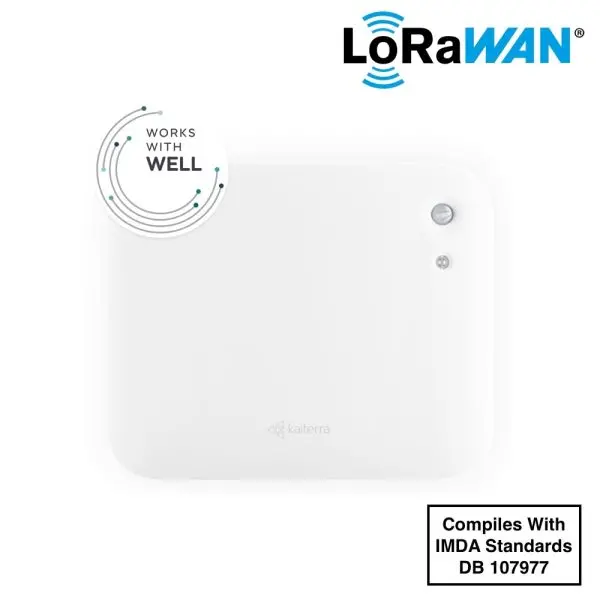
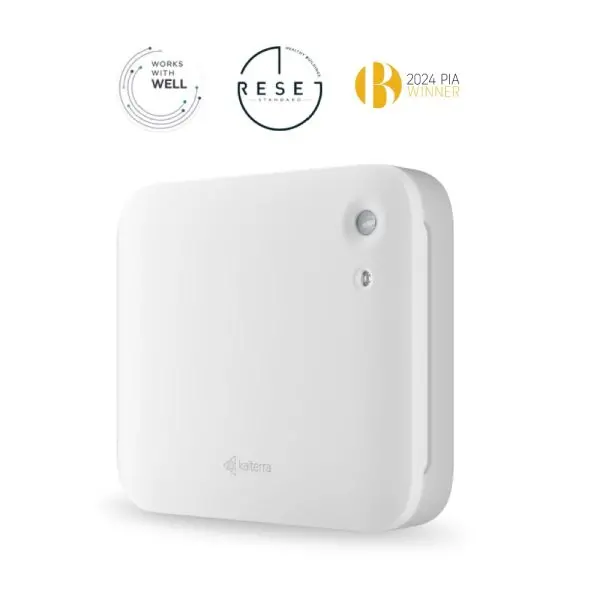
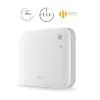
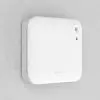
The Sensedge Go is Kaiterra’s best wireless IAQ sensor, indoor air quality monitor ever designed, featuring an extremely fast installation, and the longest battery life on the market. The Sensedge Go monitors up to 14 parameters, is RESET Grade B certified, and is part of the Works with WELL catalog.
The Sensedge Go is a wireless, battery-powered indoor air quality monitor, designed for commercial use and lightning-fase installation. Once installed, the batteries of the device can last up to 8 years using a patent-pending Adaptive Sampling technology, minimizing maintenance efforts.
Sensedge Go Demo: Everything you need to know
Products Features
- Easy installation
Peel-and-stick wall installation Electrical junction box installation - Long battery life
Up to 8 years of battery life¹ using Adaptive Sampling™ and over 4 years using a high-frequency fixed sampling rate² ³ - Long-range gateway
Sub-Ghz wireless communication; Penetrate 3~5 floors and reach over one mile horizontally - Replaceable sensor modules
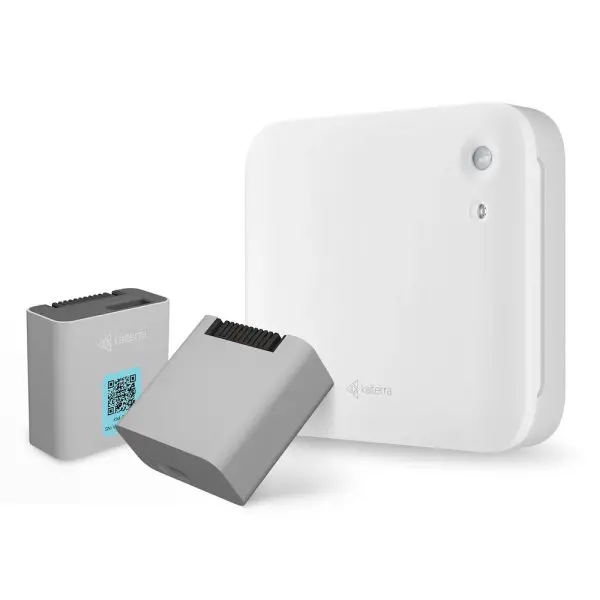
Modules can be swapped in seconds, providing a cost-effective way to maintain long-term accuracy and avoid the traditional calibration process.
Learn more about Kaiterra’s signature modular design
Applications
- Online real-time detecting indoor air quality
- Green Building Assessment
- BAS and HVAC systems
- Smart Workplace System
- Fresh Air Controlling System
- Building Energy Saving Reconstruction and Assessment System
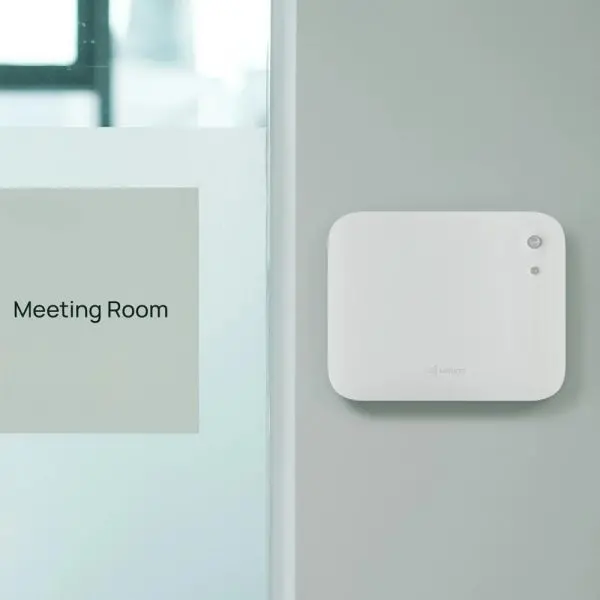
- Classroom, office, exhibition hall, shopping mall, any public places
Kaiterra Data Platform Demo: Unlock the power of your IAQ data
Sensedge Go us Available in 3 Models
- SE-300W – Sensedge Go for WELL (13 Parameters)
Made for WELL projects to earn 9 points and replace performance testing for Air & Thermal Comfort. There are CO2, Temperature, Relative Humidity, Occupancy, Light (Lux and spectrum), Atmospheric Pressure, Particulate Matter (PM₁, PM₂.₅, PM₁₀), TVOC, NO₂, CO, and O₃ - SE-300A – Sensedge Go (10 Parameters)
Best for commercial building and workplace wellbeing projects. There are CO2, Temperature, Relative Humidity, Occupancy, Light (Lux and spectrum), Atmospheric Pressure, Particulate Matter (PM₁, PM₂.₅, PM₁₀), and TVOC. - SE-300L – Sensedge Go Core (6 Parameters)
Great for increasing monitoring coverage and data density. There are CO2, Temperature, Relative Humidity, Occupancy, Light (Lux and spectrum), and Atmospheric Pressure.
Wireless IAQ Sensor Specification:
- Particulate Matter (PM₁, PM₂.₅, PM₁₀) Sensor
(Available in SE-300W, SE-300A)- Sensor technology: Laser particle sensor (Light scattering)
- Mass concentration size range
- PM₂.₅: 0.3 to 2.5 μm
- PM₁₀: 0.3 to 10.0 μm
- Mass concentration range: 0 to 1,000 μg/m³
- Mass concentration accuracy for PM₂.₅
- 0 to 30 μg/m³: ±3 μg/m³
- 30 to 1000 μg/m³: ±10 % m.v.
- Mass concentration accuracy for PM₁₀
- 0 to 30 μg/m³: ±3 μg/m³
- 30 to 1000 μg/m³: ±15 % m.v.
- Sensor output resolution: 1 μg/m³
- Calibration: Calibrated against standardized aerosol mix WELL specification requirements Adjustable particle density (K-factor) to accommodate project/region specific particulate profile.
- TVOC Sensor
(Available in SE-300W, SE-300A)- Sensor technology: Multi-pixel metal oxide sensor (MOx)
- Target gas profile: Complex mixture of 22 VOCs⁴ as defined by Molhave et al.
- Measurement range: 0 – 60,000 ppb
- Accuracy: <±15 VOC Index points or % m.v. (the larger)
- Sensor output resolution: 1 ppb
- Calibration: Ethanol in clean air
- Sampling process: Passive
- WELL specification requirements
- Calibration gas: ethanol
- Target gas profile (ppb=µg/m³ conversion factor under STP): 22 VOC mixed per Molhav et al. (1 ppb = 4.57 µg/m³)
- Carbon Dioxide CO₂ Sensor
(Available in all models)- Sensor technology: Non-dispersive infrared (NDIR)
- Measurement range
- 400 to 2,000 ppm⁵
- Up to 10,000 ppm extended range⁶
- Accuracy: ± 40 ppm ± 3%⁷ (Comply with ANSI/ASHRAE Standard 62.1-2022)
- Sensor output resolution: 1 ppm
- Target gas: CO₂
- Nitrogen Dioxide NO₂ Sensor
(Available in SE-300W)- Sensor technology: Multi-pixel metal oxide sensor (MOx)
- Measurement range: 0 – 10,000 ppb
- Sensor output resolution: 1 ppb
- Calibration: NO₂ in clean air
- Precision: <±20 % ⁸
- Sampling process: Passive
- CO Sensor
(Available in SE-300W)- Sensor technology: Electrochemical
- Measurement range: 0 to 100 ppm
- Accuracy: ±1ppm or ± 5%
- Sensor output resolution: 0.1ppm
- Target gas: CO
- Ozone O₃ Sensor
(Available in SE-300W)- Sensor technology: Electrochemical
- Measurement range: 0 to 500 ppb
- Accuracy: ±10ppb or ± 5%
- Sensor output resolution: 1 ppb
- Target: gas O3
- Temperature Sensor
(Available in all models)- Sensor technology: Digital sensor
- Measurement range: -20 – 100 °C
- Accuracy: ±0.2 °C
- Sensor output resolution: 0.1 °C
- Humidity Sensor
(Available in all models)
- Sensor technology: Digital sensor
- Measurement range: 0 – 100 %RH
- Accuracy: ±2 % RH
- Sensor output resolution: 0.1 % RH
- Atmospheric Pressure
(Available in all models)- Sensor Technology: Microelectromechanical systems (MEMS) sensor
- Pressure Range: 300-1100 hPa
- Pressure Accuracy: ±0.3 hPa
- Light Sensor
(Available in all models)- Field of view: 90 ° horizontal, 90 ° vertical
- Light channels: R/G/B/IR/C
- Measuring Range: 0 – 60000 lux
- Color Temperature range: 1,000-10,000 K
- Occupancy Sensor
(Available in all models)- Focus: 5.2 mm
- Sensing angle: 120°
- Sensing distance: 5 m
Device Specification
- Power
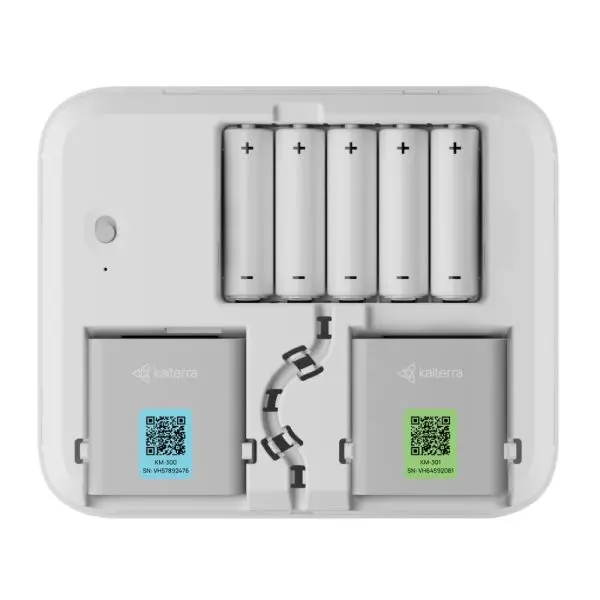
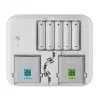
- Battery: 6 x Li/SOCl2 AA size
- USB-C: 5V 0.5A (Cable not included)
- PoE: Via PoE to USB-C converter (Cable not included)
- Battery Life
- Up to 8 years of battery life⁹ using Adaptive Sampling™ and over 4 years using a high frequency fixed sampling rate¹⁰ ¹¹
- Data Logging & Storage
- Data Storage: Cloud storage
- Local data storage: 0.5 days
- Data sampling: Adaptive Sampling™ to automatically adjust sampling frequency to maximize battery life.
- Selected sensors support a configurable sampling rate from 1 minute to 24 hours.
- Connectivity
- Frequency range (MHz): Sub-Ghz wireless communication AS923
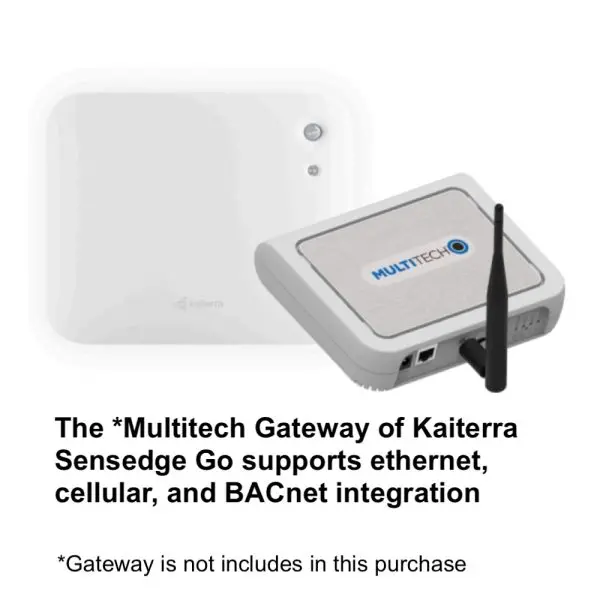
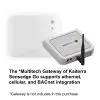
- Gateway supports cellular¹² and ethernet
- Integration
- BACnet/IP via Gateway
- API
- Modules & Calibration
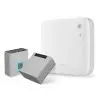
- Compatible modules: KM-300 (Particulate Matter sensor module), KM-308 (O3, NO2 & CO sensor module)
- Calibration: Swappable sensor modules
- Certifications
- Quality: RESET Grade B
- Healthy Building: Works with WELL
- Operating conditions
- Operating temperature: -20 – 50 °C
- Operating humidity: 5 to 95 %RH, non- condensing
- Installation
- Methods: Peel-and-stick installation for surface mount and drywall mount
- Electrical junction box mount with screws
- Size & Weight
- 155 mm x 126 mm x 35 mm (6.1” x 5.0” x 1.4”) 388 g (0.86 lbs)
- Using Adaptive Sampling™ in a building with 15 devices, located in a typical North American city with mechanical ventilation and strong wireless signal strength to the gateway.
- During operating hours (9-5, Mon-Fri): one sample per minute for all sensors except particulate matter, and one sample every 10 minutes for particulate matter. Outside of operating hours: one sample every five minutes for all sensors except particulate matter sensor, and one sample every 60 minutes for particulate matter.
- Actual battery life may vary based on usage, environmental conditions, and other factors.
- n-Hexane, n-Nonane, n-Decane, n-Undecane ,1-Octane, 1-Decene, Cyclohexane, m-Xylene, Ethylbenzene, 1,2,4-Trimethylbenzene, n- Propylbenzene, a-Pinene, n-Pentanal, n-Hexanal, Iso-propanol, n-Butanol, 2-Butanone, 3-Methyl-3-butanone, 4-Methyl-2-pentanone, n- Butylacetate, Ethoxyethylacetate, 1, 2-Dichloroethane
- Extended exposure to concentrations below 400 ppm may result in incorrect operation of ABC algorithm and should be avoided.
- Sensor provides readings in the extended range but the accuracy may be lower than that specified in the table.
- The accuracy specification covers environments ranging from 0-50°C and 0-80% RH, and complies with indoor air quality standards ANSI/ASHRAE Standard 62.1-2022 at 25°C.
- Sensor specifications are under controlled laboratory conditions. Field measurements may use localized ambient air quality and historical infiltration rates to enhance the accuracy and baseline readings of NO₂ concentrations. This method is effective under typical indoor conditions but may not suit environments with persistently high indoor NO₂ levels.
- Using Adaptive Sampling in a building with 15 devices, located in a typical North American city with mechanical ventilation and strong wireless signal strength to the gateway.
- During operating hours (9-5, Mon-Fri): one sample per minute for all sensors except particulate matter, and one sample every 10 minutes forparticulate matter. Outside of operating hours: one sample every five minutes for all sensors except particulate matter sensor, and one sample every 60 minutes for particulate matter.
- Actual battery life may vary based on usage, environmental conditions, and other factors.
- Cellular is supported in select countries and regions.
| Weight | 1 kg |
|---|
Related products

Rika RK900-12 Ultrasonic Wind Sensor Weather Station IoT Sensors Monitor System
- -10%
Temtop M100 8-in-1 Air Quality Monitor CO2 PM2.5 PM10 AQI Temperature Humidity Meter WIFI
Original price was: SGD298.00.SGD268.00Current price is: SGD268.00. inc. TAX
SGD245.87 exc. TAX Tongdy MSD-18 IAQ Monitor PM2.5 PM10 CO2 TVOC HCHO Detector
Rika RK300-02B Outdoor Dust Concentration PM2.5 and PM10 Sensor
SGD680.00 inc. TAX
SGD623.85 exc. TAX