
Share with others
Smart IoT Environmental Monitoring Systems
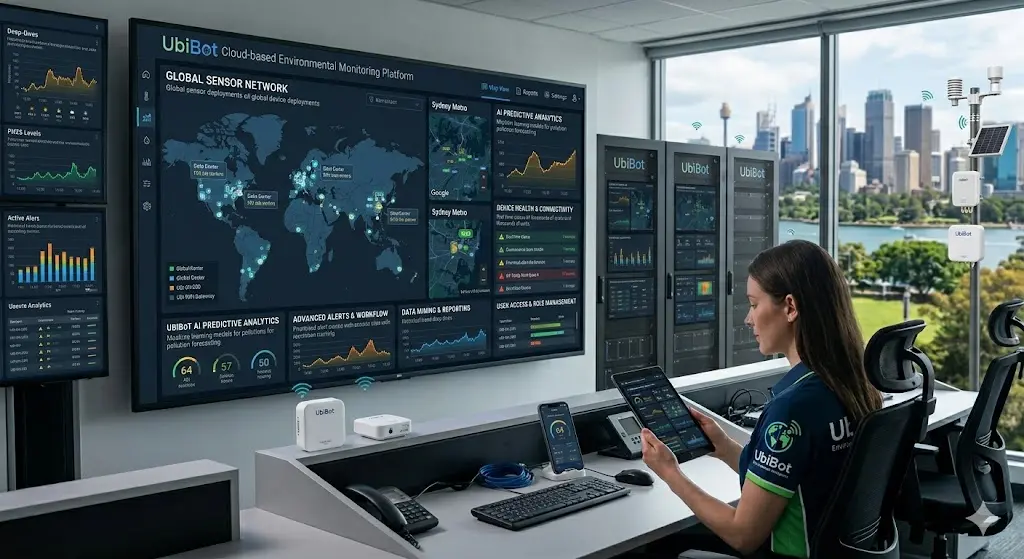
IoT environmental monitoring systems use connected sensors and cloud dashboards to monitor temperature, humidity, air quality, and workplace conditions remotely.
Smart IoT Environmental Monitoring utilizes advanced technology to enhance data accuracy and improve overall efficiency.
What is Environmental IoT?
Environmental IoT refers to the network of devices and sensors connected to the internet that monitor and manage environmental conditions such as air quality, water quality, temperature, and weather patterns. These devices collect data to improve sustainability, efficiency, and safety in various applications like agriculture, urban planning, and disaster management.
The importance of Smart IoT Environmental Monitoring cannot be overstated in today’s data-driven world.
An Environmental Internet of Things (IoT) system is an interconnected network of smart devices that continuously track, log, and analyze surrounding conditions in real time. Instead of relying on manual data logging or isolated, offline meters, an IoT framework automates the entire data collection process. This ensures constant vigilance over your facility’s environment, protecting both sensitive assets and human health.
An effective Environmental IoT ecosystem relies on four core components working seamlessly together:
- Sensors: The frontline data gatherers. Installed throughout your facility, these compact hardware devices continuously measure physical parameters like temperature, ambient humidity, and gases.
- Gateways: The central communication bridge. Because individual sensors are designed to conserve power, they transmit short-range wireless signals to the gateway, which aggregates the data and securely uploads it to the cloud via Wi-Fi, Ethernet, or cellular networks (4G/5G).
- Dashboards: Your centralized command center. The cloud dashboard translates complex, raw sensor metrics into clean visual analytics accessible from any smartphone, tablet, or desktop computer.
- Alerts: Your 24/7 digital watchdog. You can configure custom thresholds for every sensor; if parameters breach safe limits, the system instantly sends automated SMS, email, or push notifications so your team can react before damage occurs.
Benefits of Smart Monitoring
Transitioning from traditional manual logging to an automated IoT system delivers significant operational advantages across various industries in Singapore.
- Remote Access: Monitor your facility’s environmental metrics 24/7 from anywhere—whether you are working from home, traveling, or managing multiple facilities across Singapore.
- Predictive Maintenance: Spot minor anomalies on your dashboard before they cause a total system breakdown. For instance, a gradual rise in server room temperature over time can indicate a failing air conditioning unit, allowing you to schedule repairs proactively and prevent unplanned downtime.
- Compliance: Singapore industries face strict regulatory standards regarding environmental control (such as NEA guidelines for indoor air quality and HSA/GMP/GDP standards for pharmaceuticals). Smart IoT monitoring automates your data logging, creating an unalterable, timestamped audit trail.
- Energy Efficiency: Over-cooling or over-ventilating a building wastes massive amounts of electricity. By matching your HVAC and building automation schedules to real-time environmental data, you can significantly cut utility bills while maintaining a green, sustainable facility.
Smart IoT Environmental Monitoring offers countless benefits to various sectors. Implementing Smart IoT Environmental Monitoring can significantly enhance operational workflows.
Common Applications
For instance, utilizing Smart IoT Environmental Monitoring allows for better predictive analysis. Smart IoT environmental monitoring is versatile and customizable, serving critical operations across various sectors:
With Smart IoT Environmental Monitoring, compliance with regulations becomes more manageable.
- Warehouses: Protect valuable inventory, raw materials, and electronics from moisture degradation and extreme temperatures by maintaining stable storage conditions.
- Factories: Monitor industrial ambient conditions, detect hazardous gas buildups, and ensure manufacturing environments remain safe for workers and optimal for machinery.
- Cold Rooms: Essential for the pharmaceutical, biomedical, and food industries. Prevent inventory spoilage by maintaining flawless temperature conformity in walk-in freezers and cold chain storage facilities.
- Data Centers: Servers generate massive amounts of heat. Continuous temperature and humidity tracking prevents equipment overheating, static electricity buildup, and catastrophic hardware failures.
- Agriculture: Optimize indoor farming, vertical farms, and greenhouses across Singapore by precisely tracking microclimates, soil moisture, ambient light, and air quality parameters to maximize crop yields.
Smart IoT Environmental Monitoring is shaping the future of sustainable practices. Industries worldwide are leveraging Smart IoT Environmental Monitoring to enhance their operations.
Cloud Monitoring Dashboards
The core value of an environmental monitoring ecosystem lies within its cloud monitoring dashboard, transforming raw telemetry into actionable operational intelligence.
Real-Time Alerts
The dashboard functions as an instantaneous notification engine. You can customize multi-level alert thresholds (e.g., Warning vs. Critical) based on your specific operational boundaries. When a sensor reports a reading outside these parameters, the platform immediately despatches notifications to assigned personnel, minimizing response times.
Data Logging
Forget manual clipboards and error-prone human logs. The cloud dashboard continuously logs data points at set intervals (e.g., every minute, 5 minutes, or hourly). This creates a continuous, tamper-proof, and cloud-archived historical ledger that is easily exportable for management reviews or external regulatory audits.
Analytics
The effectiveness of Smart IoT Environmental Monitoring lies in its real-time capabilities.
Beyond simple readouts, the dashboard provides built-in analytical tools. It visualizes data through interactive graphs, heatmaps, and trend charts. These analytics help you isolate recurring macro-trends—such as microclimate spikes occurring during specific hours of the day—enabling data-driven optimizations to your facility management.
Recommended IoT Monitoring Systems
To build a reliable monitoring infrastructure, it is vital to utilize industrial-grade hardware and software frameworks. We recommend exploring our tailored solutions:
Data from Smart IoT Environmental Monitoring can be crucial for audits and compliance checks.
- Smart IoT Products: Browse our comprehensive suite of smart sensors, secure cellular/LoRa gateways, and robust localized environmental meters engineered for high-accuracy performance.
- EDSS™ Systems: Discover our specialized Environmental Detecting Systems & Services (EDSS™)—a turnkey, fully calibrated, and compliant architecture built for enterprise-grade environmental asset protection with peace of mind 24/7 monitoring services.
Through Smart IoT Environmental Monitoring, organizations can gain insights that drive efficiency.
FAQs
What sensors are used?
Depending on your operational requirements, standard deployments feature temperature and relative humidity (%RH) sensors, indoor air quality sensors (CO2, VOCs, HCHO, PM2.5), liquid leak detection cables, barometric pressure sensors, and specialized toxic or combustible gas detectors.
Can monitoring be remote?
Yes. Because the system routes data securely through cloud servers, authorized users can securely access live readouts, adjust sensor configurations, and review historical logs remotely from any internet-enabled device worldwide. Choosing the right tools for Smart IoT Environmental Monitoring is essential for optimal results.
What is LoRa monitoring?
LoRa (Long Range) monitoring uses a low-power, long-range wireless RF modulation technology. It allows wireless IoT sensors to transmit data across massive physical distances (and through thick industrial walls or concrete multi-story buildings) to a central gateway without consuming high battery power, often extending sensor battery lifespans up to 5+ years.
How to ensure the measuring and monitoring reading is accurate at all times?
Annually calibrate your measuring instruments by ISO/IEC 17025 certified or SAC-SINGLAS Accredited Labs, conduct routine maintenance, use high-quality equipment, and implement consistent testing procedures. Keep environmental factors in check, such as temperature and humidity, and record measurements under standardized conditions. Train personnel adequately to minimize human error and use multiple methods for cross-verification.
Recommended

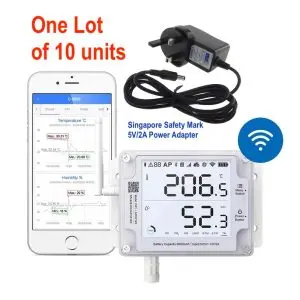
EDSS™ Warehouse 10 units UbiBot GS1-A Industrial-Grade WIFI Wireless Data Logger IoT System
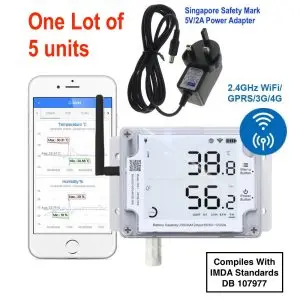
EDSS™ Warehouse 5 units UbiBot GS1-A4G Industrial-Grade WIFI 4G-IoT SIM Wireless Data Logger IoT System
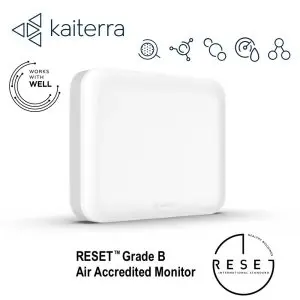
Kaiterra SE200A Sensedge Mini 7-in-1 PM2.5 PM10 TVOC CO2 O3 Temperature Humidity Monitoring Solutions
- -9% HOT
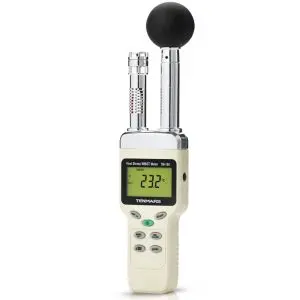
Tenmars TM-188 Heat Stress WBGT Meter with Dew-Point (DEW) and Wet bulb (WET)
Original price was: SGD328.00.SGD300.00Current price is: SGD300.00. inc. TAX
SGD275.23 exc. TAX
Case Studies
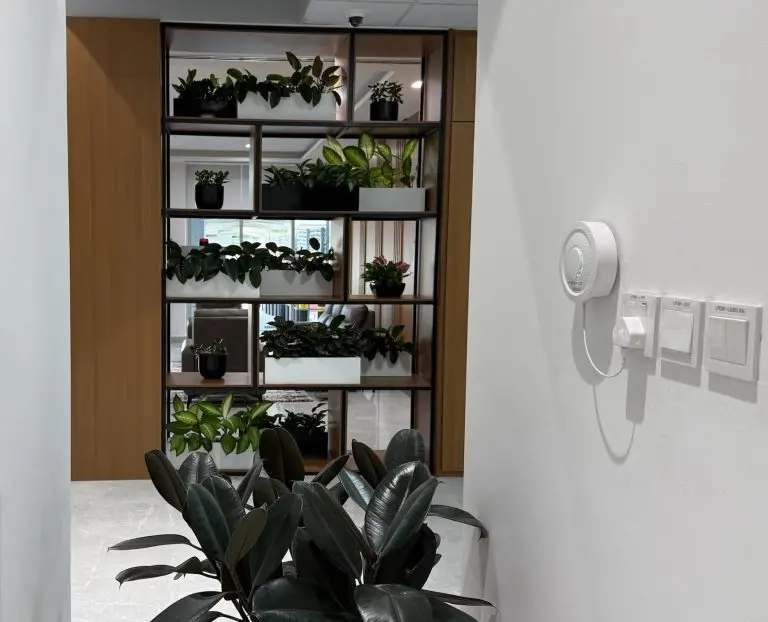
Enhancing Workplace Wellness Through Smart IAQ Monitoring at Jurong Island Administration Building
Project Overview As organisations in Singapore continue to prioritise employee wellbeing, Indoor Air Quality (IAQ) monitoring, including smart iaq monitoring, has become a critical component of workplace health and smart building management. Implementing smart iaq monitoring can significantly enhance the…
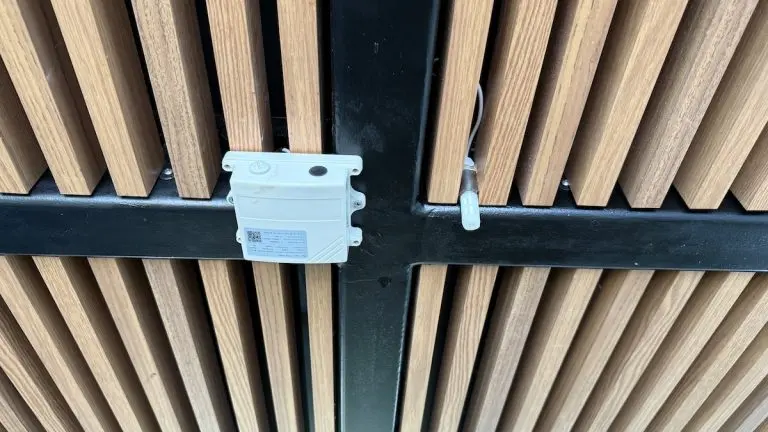
Optimizing Workspace Health with Smart Indoor Air Quality IAQ Controller
In the modern built environment, the “invisible” quality of the air we breathe directly impacts cognitive performance, health, and operational costs. Poor air quality can lead to a variety of health issues such as headaches, fatigue, and respiratory problems. We…
